


How Leading Brands Are Growing Through Resale: Inside the 2026 Archive Summit
Five takeaways from a day with leading brands on how resale is shaping their next chapter of growth.

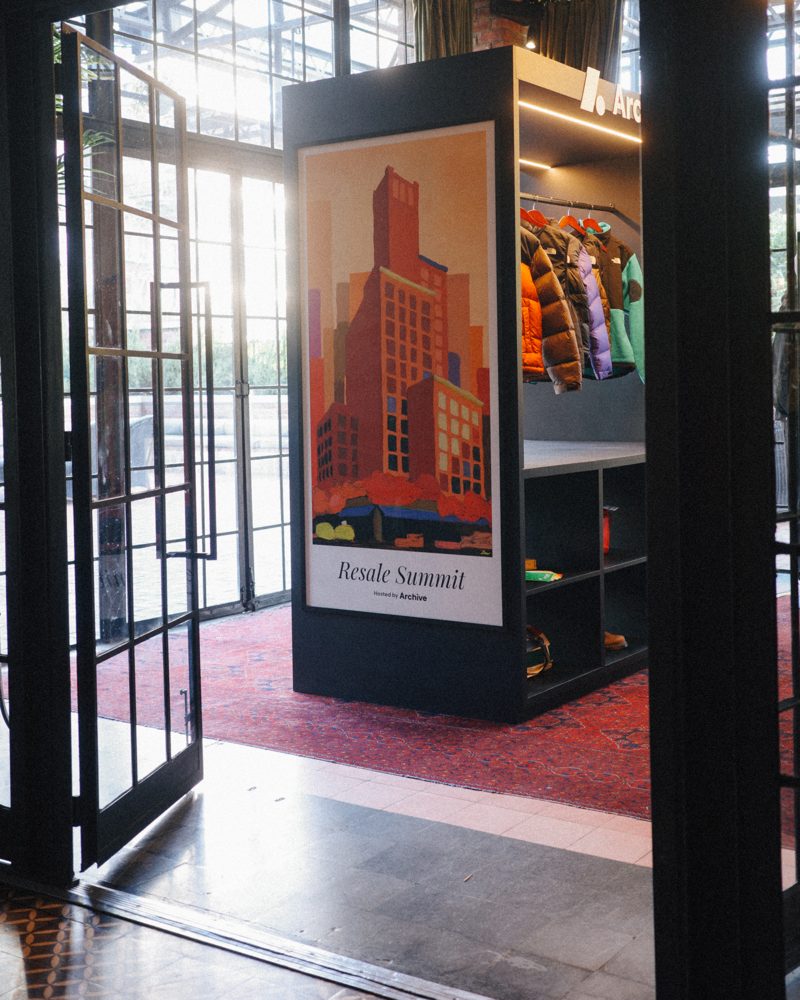
On October 7, brand leaders, resale business managers and partners gathered at The Bowery Hotel in New York for Archive's second annual Resale Summit.
Last year's summit was about getting resale off the ground. This year, brands brought a harder question: once resale is live, how do you make it drive growth?
Resale is no longer a side project or a sustainability line item. The brands getting the most from it treat it as a way to win new customers, and they run it with the same rigor as their mainline business.
Why resale, why now
Emily Gittins, Archive CEO, opened the day by asking the room to guess which company sells the most clothing in France. Few guessed the answer.

without ever making a garment of its own.
The point: secondhand is one of the fastest-growing channels in fashion, and it runs on products brands made. In the US, it grew nearly four times faster than retail clothing last year. Brands can reach those shoppers themselves or leave them to someone else.
This matters now, more than ever, because finding new customers is the hardest it's ever been.
Paid media costs more every quarter. The price of a Meta ad in the US rose 33% in two years.
Shoppers hunt for value. In a 2026 survey, 40% of Americans said they had switched to cheaper brands to save money.
AI has made price comparison free. Shoppers now put a budget in the prompt ("a warm jacket under $150"), so a $250 jacket never shows up.
Every brand has shoppers who want its product but won't pay full price. Discounts train loyal customers to wait for sales, and outlet product costs brand equity. Resale reaches those shoppers with items already made, priced by age and condition.
That idea ran through the rest of the day. Here are five takeaways from the panels and workshops that followed.
Resale is a customer acquisition strategy
On and Tecovas dug into who the resale customer is, and how they differ from mainline shoppers, on the "The Resale Customer: What the Data Actually Shows" panel. Here's what they found:

- Many are new to the brand. For some brands, most resale customers are net new, and many have never bought at full price.
- They spend like mainline shoppers. Resale order values can come close to mainline.
- They come back. Regular resale shoppers return more often than mainline shoppers, and many go on to buy new.
- They skew younger. Across the industry, Gen Z and millennials drive most of secondhand's growth.
McKinsey's 2026 research points to the same trends our partners are seeing: higher-income shoppers buy secondhand by choice, and fears that resale eats into full-price sales aren't supported by the data.
Resale is the only way down the price ladder that costs you no pricing power, and it is the best acquisition channel most brands sleep on.
Our own data shows who these shoppers are:
of resale buyers chose resale for a better price than new, or to buy from the brand.
resale buyers on Archive sites had never bought from the brand before.
of those new customers go on to make a full-price purchase within six months.
These are people who already wanted the brand and were waiting for a price they would pay.
If you run resale for your brand, frame it to leadership as a source of new customers. Ask for resale's new customers to count toward the company's acquisition goal. Then report three numbers every quarter: how many new customers resale brought in, what they cost, and how many went on to buy full price.
Shoppers can't buy from a resale site they don't know exists
In the Customer Acquisition Playbook workshop, brands mapped their resale marketing against their mainline marketing. Most programs launch with a head start from the mainline audience, but few shoppers know branded resale exists yet, and that head start runs out.

Small, fast experiments in resale marketing can pay off quickly.
One brand tested "Shop resale" against "Shop pre-loved" in its main site navigation. "Shop resale" won, and once the brand rolled it out, daily visits to the resale site rose by about a quarter with no added media spend.
Another brand went from search ads alone to a $5K Meta test, saw results within weeks, and scaled both.
Several partners told our team they now see a direct line between paid marketing spend and the share of new customers resale brings in.
Most programs lean on their mainline audience for too long. Resale marketing has two jobs.
Demand capture
Turns people who already know the brand into resale buyers, through mainline site links, email, paid search and retargeting. It's easy to set up, but it can only grow as far as existing demand.
Demand generation
Reaches people who weren't looking for your resale site, through paid social, creators and partnerships. It takes more effort, and it's how programs grow past that limit.
Resale marketing should grow in stages, just as mainline marketing does: a foundation of mainline links, email and paid search; growth through paid social; then experiments with channels like affiliate, Pinterest, Reddit and live shopping.
If a channel drives your mainline business and you aren't using it for resale yet, start there.
After year one, growth means balancing supply and demand
New Balance, lululemon and Fjällräven walked through how their models changed after launch on the "Beyond Year One" panel. Each started with one main source of inventory and added more as demand outgrew it.

Finding new inventory was the easier step. Getting internal approval to sell it took longer. The panel shared three approaches:
- Speak to the other team's goals. One brand won over its wholesale team by showing that resale would cut the credit memos that team is measured on.
- Prove the margin. Where resale competes with other channels for the same units, brands were able to win the inventory by proving resale earns more per item.
- Pilot first. One brand tested mail-in trade-in with its own employees before opening it to customers, which made the launch easier to approve.
Resale programs that don't evolve after launch stall.
A resale business is a marketplace, so it swings back and forth: grow demand and you run short of inventory; find more inventory and you need more buyers. Programs that keep growing plan for both sides from the beginning.
Map every pool of inventory your brand already has: returns, damages, overstock, factory seconds, trade-ins, and items your customers own. Then rank them by volume and by how hard each will be to get approved to decide where to start.
The hardest part of growing resale is inside your own company
In workshops and side conversations, brands at every stage named similar hurdles: resale often isn't anyone's full-time job, budget can be hard to secure, other teams may worry about full-price sales, and as the business scales, teams can disagree over who gets credit.
Brands also shared what helped them get past those hurdles:
- Bring data to finance. Secondhand-market data won over skeptics on the finance team.
- Find the right home. Programs moved faster under a revenue leader focused on growing the customer base, who worried less about cannibalization.
- Start with a pilot. Framing the first phase as a pilot cut the number of approvals needed.
Most people at a resale summit already believe in resale. Their challenge is bringing the rest of the business along, since resale touches tech, marketing, legal, operations and finance.
Pick the one team whose support you need most and pitch resale in its terms: new customers for marketing, recovered margin for finance, fewer credit memos for wholesale. Then plan year one with that team before the contract is signed.
AI is changing how fast resale can grow
Ryan Rowe, Archive CTO, showed how AI has changed the way Archive builds and runs resale.
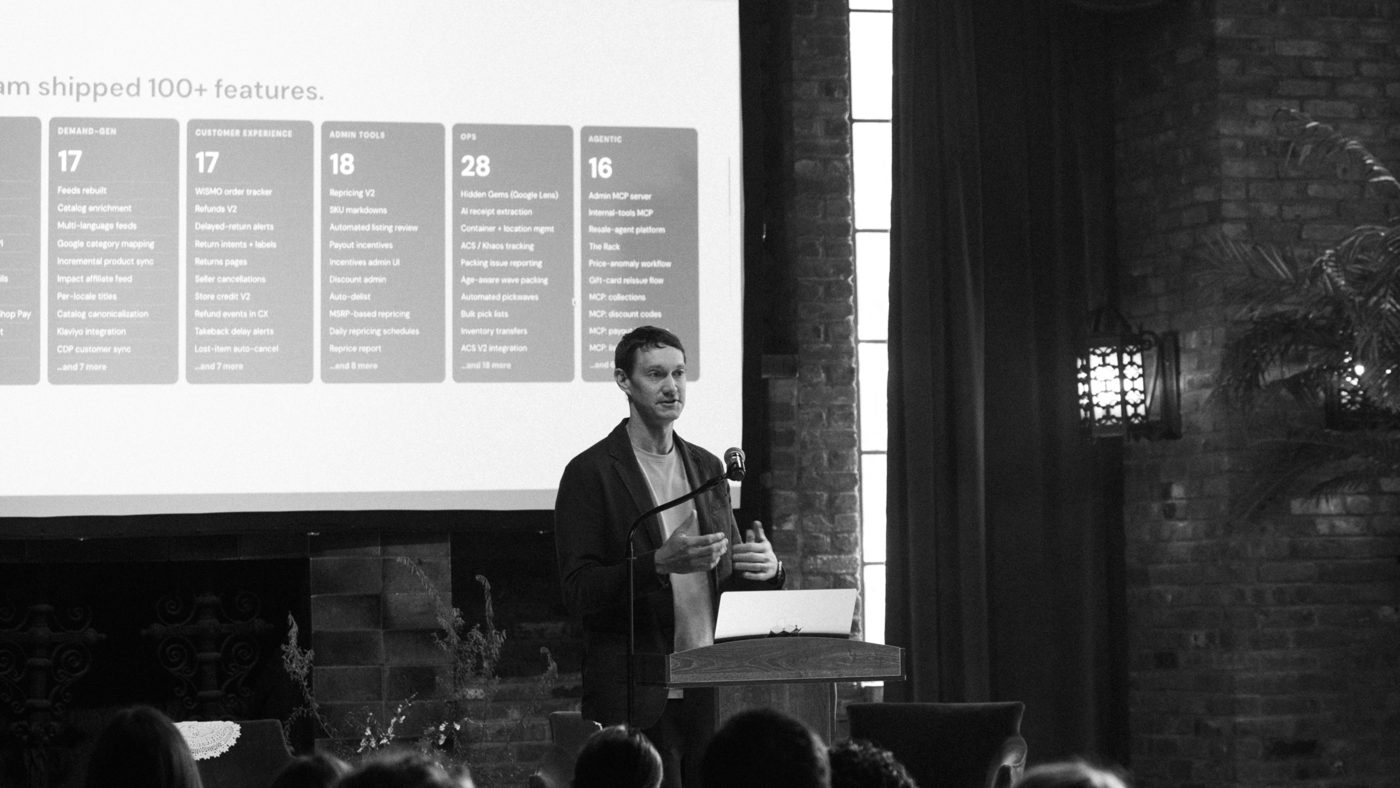
Ryan went deep on pricing, one of the hardest problems in resale. A secondhand item may be one of two in its size and color, from any year of the catalog, in any condition.
With a set of AI agents that analyze sales, run pricing tests and propose new prices for a person to approve, Archive has cut the time it takes to test a new pricing approach by nearly 85%.
Pricing is one lever of many. Archive is building agents that study each brand's resale business, recommend changes and make them in the platform, with a person approving each step. The same approach applies to where items sell: the brand's site, marketplaces, live shopping and stores.
Resale has a lot of moving parts making it difficult to manage by hand: one-off items, shifting prices, several sources of supply and many places to sell.
The brands that grow fastest will test constantly. At Archive, we're moving quickly to bring these tools to resale teams, so they spend less time on manual work and more time growing the business.
Resale supports in-store foot traffic
In the "Taking Resale IRL" workshop, Archive demoed its new point-of-sale tool for stores and pop-ups, and brands talked through how resale on the shop floor lifts store numbers:

- Bigger baskets. Resale shoppers add new items to the same trip.
- Higher prices per item. Shoppers who can see an item's condition pay more.
- More mainline sales. Trade-in credit gets spent on new product.
- Traffic in slow months. Resale gives shoppers a reason to buy when mainline isn't on promotion.
Done well, in-store resale becomes a steady source of store revenue and a reason for customers to keep coming back.
Where to start
If you missed the summit, here are five things you can do this quarter. Pick the one that fits where you are:
Set your acquisition benchmark
Work out what each of your current channels pays for a new customer. That is the bar a resale channel has to clear.
Pick your first marketing lever
Look across the channels that drive your mainline business. Choose the one or two you would test first when resale goes to market.
Find your inventory
Work out where supply would come from. Talk to wholesale and returns, and search your brand on resale marketplaces to see what already sells without you.
Map the buying committee
Work out who already sees the opportunity, who you need to win over, and who makes the final call.
Build the business case
Turn those inputs into a picture of success, with a base case and an upside case. Let us know if you want help with this piece.
Count resale's new customers
Report how many new-to-brand customers resale brought in, and how many went on to buy full price. Ask for that number to count toward your company's acquisition goal.
Test your next marketing lever
Look across the channels that drive your mainline business. Pick one you are not yet using for resale and plan a small test.
Grow your inventory
List every pool of product you could resell, and what it would take to get each one approved.
Win your next stakeholder
Pick the team whose support you need most, and pitch resale in terms of its goals.
Run one experiment
Test a price, a channel, a site label or an in-store moment, and measure it the way you measure mainline.
Set up a call to walk through how Archive can help drive meaningful growth for your business.
Let's talkSee you next year
The biggest shift from last year to this one was in the questions brands asked. In 2025, many brands were still asking whether resale was right for them. In 2026, everyone in the room knew resale is growing, and most were already running it in some form. Their questions were about how to scale it and how to prove its value inside their companies.
Thank you to every brand, speaker, and partner who joined us at The Bowery.
Resale is the ultimate customer acquisition strategy, and brands embracing resale are the ones who get to prove it.


Photography by Kelsey Cherry